Importance of CSR Form 2 in CSR Reporting
 Team TechCSR
27 May 2026
Team TechCSR
27 May 2026
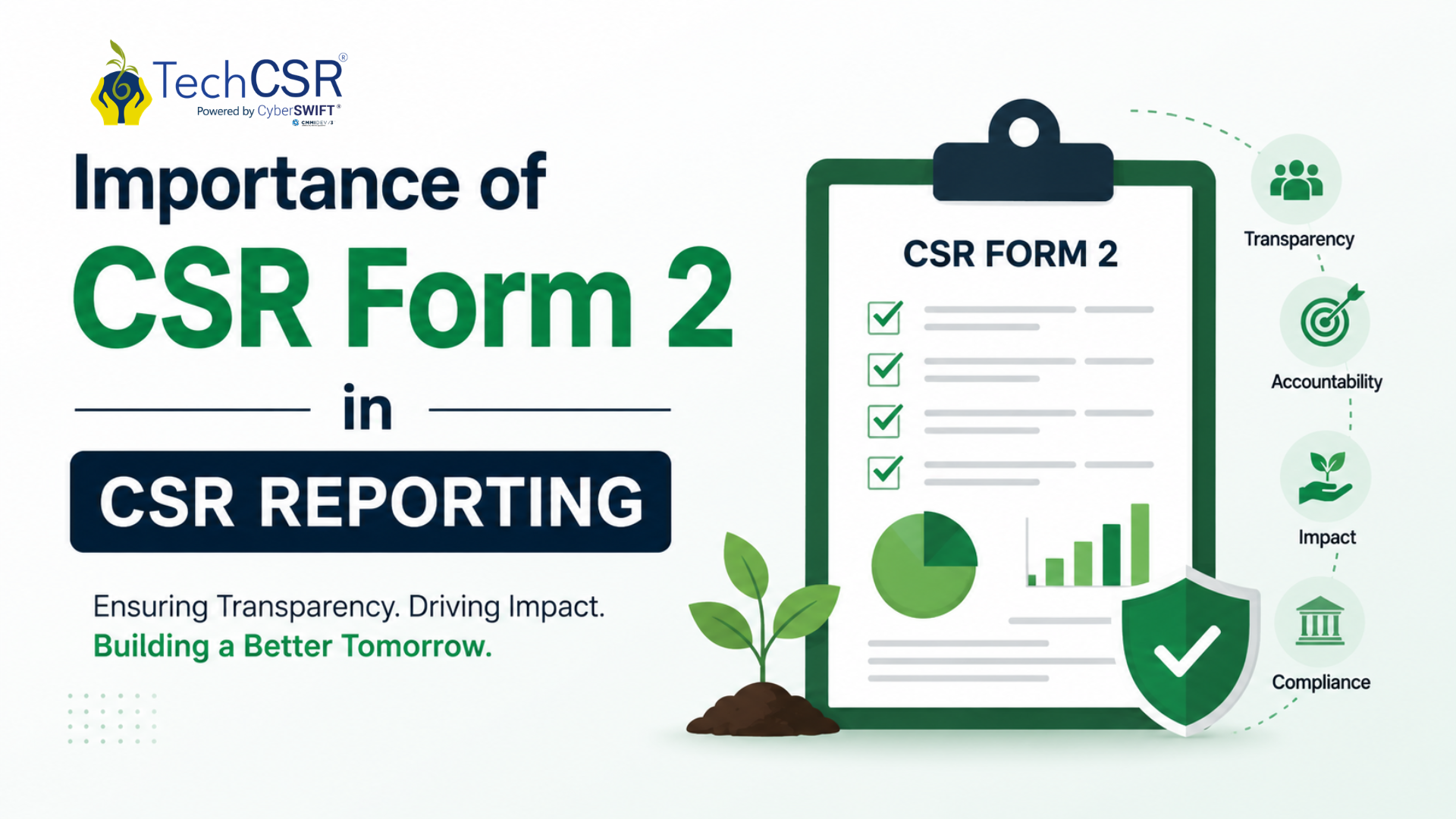
Corporate Social Responsibility (CSR) has become an essential part of business operations in India. Companies are no longer expected to only generate profits, they are also expected to create a positive social impact. To ensure transparency and accountability in CSR activities, the Ministry of Corporate Affairs (MCA) introduced CSR Form 2 as part of the annual CSR reporting process.
For every CSR organization, understanding the importance of CSR Form 2 is crucial for maintaining compliance and presenting accurate CSR data. In this blog, we will explain everything, including why the CSR form 2 matters, what information it contains, common challenges, and how organizations can simplify the reporting process.
What is CSR Form 2?
CSR Form 2 is a reporting format introduced by the Ministry of Corporate Affairs (MCA) for companies covered under CSR regulations in India. It is filed as an addendum to Form AOC-4 and contains detailed information about a company’s CSR activities during a financial year.
The form helps regulators understand:
-
How much CSR budget was allocated
-
How much amount was spent
-
Which CSR projects were implemented
-
Details of implementing agencies
-
Ongoing and completed projects
-
Impact assessment details
-
Unspent CSR amounts, if any
The main objective of the form is to improve CSR transparency, accountability, and governance.
Why is CSR Form 2 Important?
1. Ensures CSR Compliance
One of the biggest reasons why CSR Form 2 is important is because it helps companies comply with the CSR provisions under the Companies Act, 2013.
Incorrect or incomplete reporting can create compliance risks for organizations. Filing accurate CSR data helps companies stay aligned with regulatory requirements and avoid legal complications.
2. Improves Transparency in CSR Activities
Transparency is one of the core pillars of effective CSR. Through CSR Form 2, companies publicly disclose how CSR funds are utilized and what impact their initiatives are creating.
This transparency helps:
-
Build trust among stakeholders
-
Improve corporate reputation
-
Showcase social impact efforts
-
Strengthen investor confidence
3. Helps Track CSR Spending
Many organizations face difficulties in tracking CSR budgets across multiple projects and locations. CSR Form 2 creates a structured reporting mechanism that helps companies organize and monitor CSR spending more efficiently.
Companies can clearly track:
-
Approved CSR budget
-
Actual expenditure
-
Administrative overheads
-
Unspent CSR amounts
-
Transfers to specified funds
4. Strengthens CSR Governance
Strong CSR governance requires proper documentation and monitoring. CSR Form 2 encourages companies to maintain accurate project records, financial details, and implementation data.
This improves internal coordination between:
-
CSR teams
-
Finance departments
-
Implementing partners
-
Compliance officers
-
Senior management
5. Supports Better Impact Assessment
CSR is not only about spending funds, but it is also about creating measurable impact. Reporting through CSR Form 2 helps organizations evaluate whether projects are achieving their intended outcomes.
This enables companies to:
-
Measure project effectiveness
-
Improve future CSR planning
-
Identify gaps in implementation
-
Create data-driven CSR strategies
Key Information Included in CSR Form 2
CSR Committee Details
The form includes details about the CSR committee responsible for overseeing CSR activities.
CSR Expenditure
Organizations must provide information about:
-
Total CSR obligation
-
Amount spent during the year
-
Ongoing project expenses
-
Administrative costs
Project Information
Companies must report project-level details such as:
-
Project name
-
Location
-
Duration
-
Sector
-
Implementation mode
Implementing Agency Details
If external NGOs or foundations are involved, their registration and compliance details must also be mentioned.
Impact Assessment
Applicable companies may need to disclose information related to CSR impact assessments.
Common Challenges in Preparing CSR Form 2
Despite its importance, many organizations struggle with CSR reporting due to several operational challenges.
Data Collection Issues
CSR data is often scattered across multiple spreadsheets, emails, and departments. Collecting all required information becomes time-consuming.
Lack of Centralized Reporting
Without a centralized CSR management system, tracking project progress and expenditure becomes difficult.
Incomplete Documentation
Missing invoices, project reports, utilization certificates, or impact data can delay reporting.
Coordination Problems
CSR reporting usually requires coordination between multiple stakeholders, including finance teams, CSR managers, and implementation partners.
How Technology Simplifies CSR Form 2 Preparation
Technology plays an important role in improving CSR reporting efficiency. Modern CSR management platforms help organizations prepare project data, track expenditures, and maintain documentation in a structured way.
This is where TechCSR helps CSR organizations streamline the preparation process for CSR Form 2.
TechCSR helps companies by:
-
Organizing CSR project information
-
Tracking CSR expenditure data
-
Managing implementing agency details
-
Monitoring project progress
-
Maintaining required documentation
-
Providing insights needed for CSR reporting
While the report itself cannot be directly generated from the software, the platform helps CSR teams gather and manage all the essential insights and data required to prepare the report more efficiently and accurately.
This reduces manual work and helps CSR managers maintain better reporting readiness throughout the year.
Best Practices for Accurate CSR Form 2 Reporting
Maintain Real-Time CSR Records
Avoid waiting until the end of the financial year. Update project and expenditure data regularly.
Use a Centralized CSR System
A centralized platform can help manage all CSR-related data in one place.
Coordinate with Implementing Agencies
Ensure NGOs and implementation partners provide timely reports and documentation.
Conduct Internal Reviews
Review CSR data internally before final submission to avoid reporting errors.
Focus on Documentation
Maintain invoices, approvals, project reports, and utilization certificates properly.
Future of CSR Reporting in India
CSR reporting in India is becoming more structured, transparent, and impact-focused. Regulatory expectations are increasing, and companies are expected to maintain higher levels of accountability.
Forms like CSR Form 2 are helping create a more transparent CSR ecosystem where organizations can demonstrate both compliance and social impact effectively.
Companies that invest in better CSR data management and reporting systems today will be better prepared for future compliance requirements.
Conclusion
CSR Form 2 plays a critical role in ensuring transparency, accountability, and compliance in CSR reporting. From tracking CSR expenditure to monitoring project impact, the form helps organizations maintain structured and responsible CSR practices.
However, preparing the report can become complex without proper systems and documentation. By using CSR software solutions like TechCSR, organizations can simplify data management and gain the necessary insights required to prepare accurate CSR reports efficiently.
As CSR regulations continue to evolve in India, having a strong CSR reporting process will become even more important for companies, CSR foundations, and CSR leaders.