GIS-based Health Monitoring System
Learn how a maternal and newborn survival initiative, run by a leading steel manufacturer's rural development arm, touched the lives of villagers across two states.
Project Introduction
The rural development arm of a leading Indian steel manufacturer runs social development programmes for communities around its operational units. One of its major CSR initiatives is a maternal and newborn survival programme, developed through a multi-stakeholder collaboration involving the state government, a funding agency, and an implementation NGO, aimed at reducing infant and maternal mortality. The programme reduced the Neonatal Mortality Rate by 61.2% and the Infant Mortality Rate by 63.1% in its pilot block over five years, and was later scaled to over 1,600 villages across roughly 2.2 lakh households in two states. The initiative was later shortlisted among the final 25 international projects in an annual cross-country recognition programme for best CSR practices.

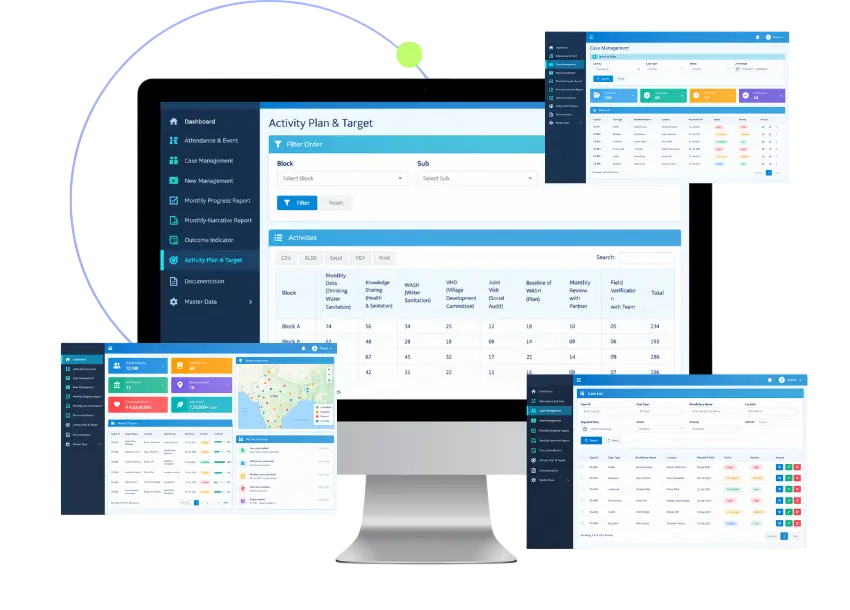
The client's health application is designed to run on web, mobile phones, and tablets. The software application empowers field staff to detect and follow up high-risk newborn babies and pregnant mothers, ease training of women health volunteers, and thus help in mapping high-priority areas deserving special focus on battling infant mortality and maternal morbidity. The CSR application is aimed at reinventing traditional manual information capturing with an on-field data capturing provision and a central repository of data, thus providing real-time monitoring.
The dashboard displays a visualization of the identified areas with the number of high risk mothers & neonates in each block. The dashboard helps by analyzing where the number of high risk mothers are more and needs immediate attention. It also acts as a decision support system for the management who can view the details of the missed visits by which health worker along with their contact number. This feature helps the management to call the corresponding worker directly, understand the reason behind the missed visit and assign another worker for the same. This ensures that all mothers and children are attended regularly and proper measures are taken for their cure on-time.
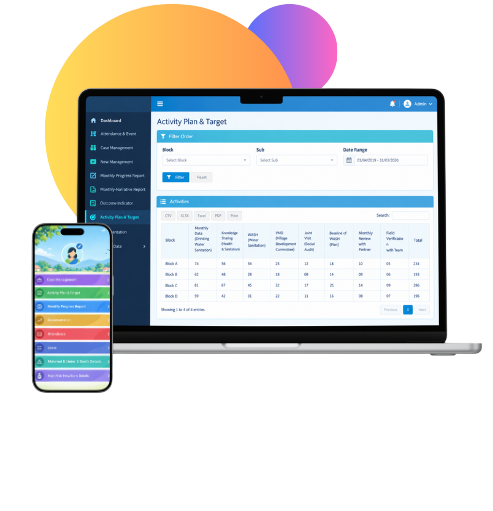
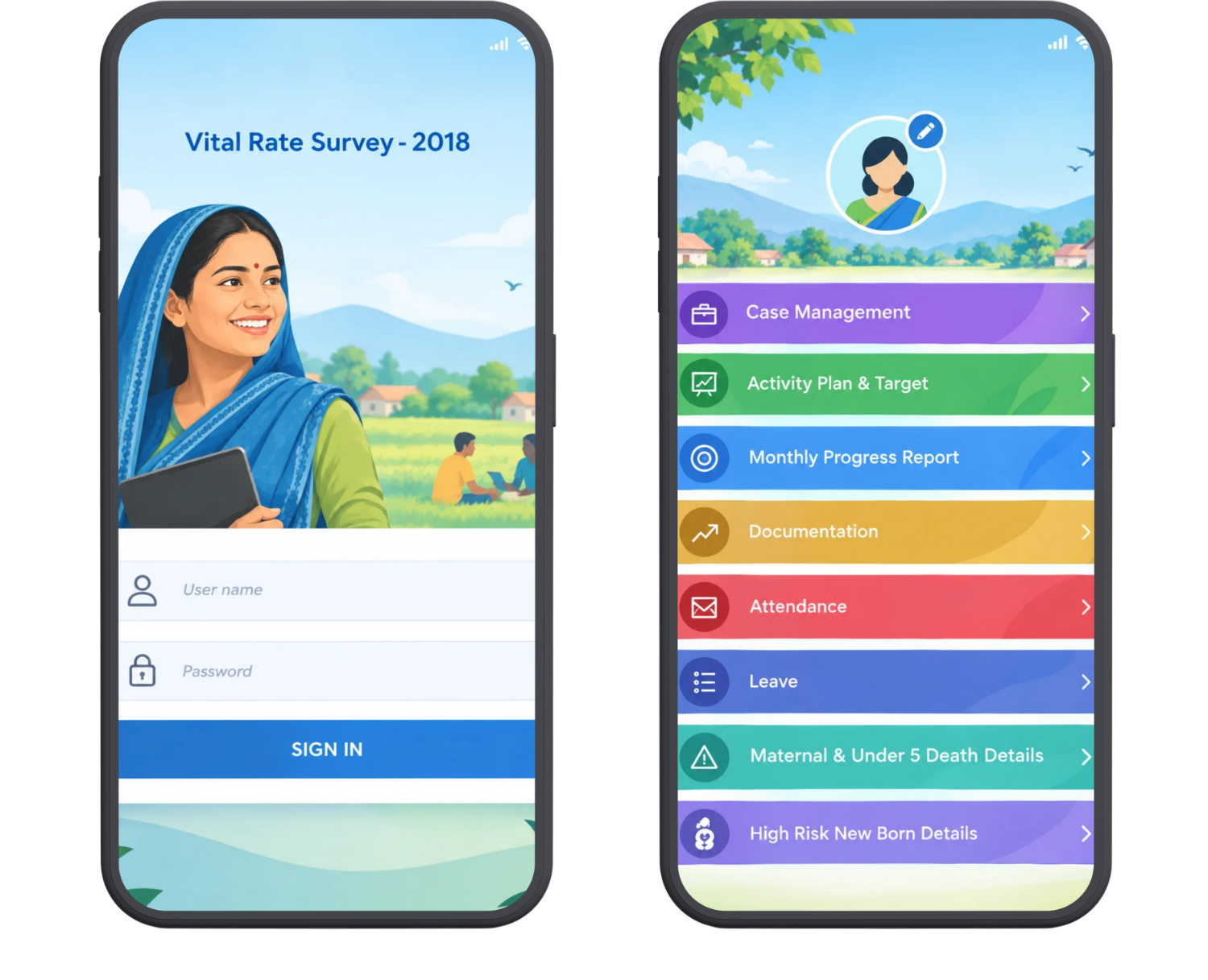
Several types of reports can be generated which helps by acting as a central repository and decision support system:
- Monthly Progress Report: Each Sahiya submits a monthly progress report with some pre-defined indicators for monthly assessment which assists in progress monitoring
- Monthly Narrative Report: The block coordinator’s Monthly Narrative Report submitted during monthly meetings keeping a track of qualitative analysis and complaints etc.
- Outcome Indicator: Reports of outcomes under each block coordinator is generated for a comparative study helping in impact assessment
Ready to Make Your CSR Impact Count?
Let’s build a transparent, effective, and sustainable CSR ecosystem — together.